L'anus de la venus
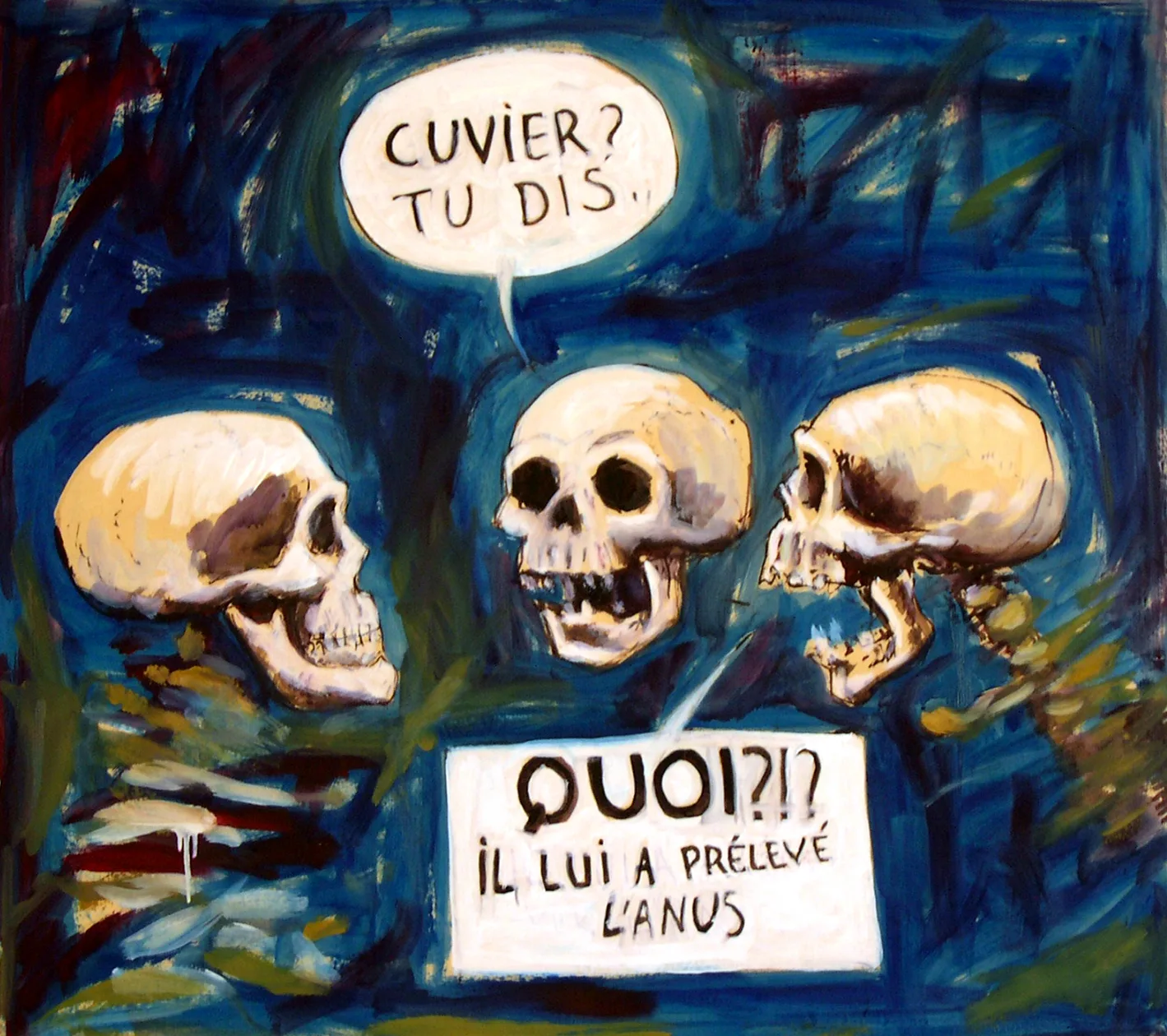
Musée de l’Homme, Paris. November 6, 2002. There they are again, right above our heads, gravely debating whether South Africa should be allowed to have Saartjie’s remains back. Down here, in the basement storerooms, Down here, in the basement storerooms, the skulls have excellent acoustics. Word travels fast when nobody has any flesh left to muffle it. And this particular story has plenty of meat on it. Or used to. Dead in Paris in 1815. Dissected by Cuvier. Skinned, cast, carved up, catalogued. Skeleton over here, skin over there, vulva and anus removed and preserved as anatomical specimens — or, more accurately, prurient trophies. Science, apparently, had very specific appetites. Two centuries later, the boys upstairs are still chewing it over. Can she go home? Is that legally possible? What about the collections? What about precedent? What if one returned corpse leads to another, then another, until suddenly half the basement starts asking for a passport? Then comes the usual cloud of hot air. Principles are raised. Procedures are invoked. Someone worries about opening the floodgates. The skulls glance at one another. They have heard this kind of thing before. The living become extremely cautious whenever the dead show signs of wanting to leave. Nobody down here needs a lecture on the meaning of “inalienable.” The word has been hanging around so long it has practically calcified. One skull catches the name. “Cuvier?” A beat. “The anus too?” Apparently so. That one takes a moment to settle. Still, something is different tonight. Somewhere above the pipes, shelves, jars, accession numbers and boxes of human remains, the machinery of the Republic has begun the extraordinary process of deciding whether a dead woman may finally stop being French property. The skulls wait. They are very good at waiting. Upstairs, the living debate. Downstairs, the dead listen. And for once, there is a chance that one of them might actually get out. Saartjie Baartman, exhibited in Britain and France as the “Hottentot Venus,” was put on public display in London and later Paris before her death in 1815. Her body was dissected by Georges Cuvier; her skeleton, a cast of her body, and parts of her remains entered the collections of the Muséum national d’Histoire naturelle. Her skeleton and cast remained on display at the Musée de l’Homme until the 1970s. After years of requests from South Africa for their return, legislation was finally passed in 2002 allowing her remains to be repatriated.